Monday, August 27, 2012

Geology Photo of the Week 1 - Aug 26-Sept 1, 2012

Hi everyone,

Every so often I come across some really cool stuff and like every other geo-blogger out there I immediately take a photo and then share it. When I first started blogging I started a geology photo of the week theme in which I would write a description of the picture. Unfortunately, I let this lapse for the past year and a half so it would be nice to re-start it. Obviously this initiative is nothing unusual as many other geo-blogs already post a "Photo of the Week" sort of feature.  However, I hope that I can also contribute to the growing body of geology photos on the web by also posting every photo on ImageGeo the open access geology photo repository that the European Geosciences Union operates. 

Sometimes the photo will be a picture of a mineral or fossil. Sometimes it will be scenic and sometimes it will be something in the lab. So stay tuned since who knows what it will be? All photos will also be accompanied by a brief description explaining the geological significance and/or the location of the photo. 

To begin....

(Photo: Matt Herod)
This photo was taken in May 2009 by me on a field trip to Dinosaur Provincial Park in Alberta. It is a dinosaur bone, likely belonging to a hadrosaur, in soft sediment that has been exposed by erosion and will soon fall out of the small hoodoo that it resides in. You can see that half of it has already done so. Forgive the absence of scale, but the fossil was too high up for me to get a knife/pen/coin up there.

Dinosaur Provincial Park is one of the most incredible geological places that I have ever been. I don't want to write a super long post here but it is known around the world as one world's richest dinosaur bone sites. This was due to its fortuitous location and climate conditions during the Cretaceous period. It was a sub-tropical paradise full of rivers that deposited thick sand beds in which the bones are found today. Then, 10,000 years ago the continental glaciers covering Canada receded, exposing the sandy area to erosion, leading the formation of the beautifully carved badlands.  

The badlands. (Photo: Matt Herod)
Hope you enjoyed the first "photo of the week" and will come back for more down the road.

Matt  


Tuesday, August 14, 2012

Field Work Photos 2012

I am writing this post from the Vancouver Airport on my way back to Ottawa from Whitehorse where I was conducting my field work this summer. For now I'll just post some of the coolest pictures that I took. I'll write something more substantive on what we were doing there in a little while...at least after I have dried out my tent.

Our first stop once we arrived in Whitehorse was to the Yukon Archaeological Survey, who are kind enough to store our camping supplies for us when we aren't using them. A visit to the survey is always a cool experience since every ancient bone and artifact found in the territory is housed there. 

Mammoth leg bone.

They have quite a large collection of bones at the survey. It seems as though every square inch of the place as something cool in it. 

Gold rush era grave marker

Another gold rush era grave marker. Unfortunately the name is not legible. 
 Once we have picked up the gear it is time to head to the field. This year we were working the in Whitehorse area so we were able to camp near town and commute to the field every morning...super convenient!! In order to access our field area, which was located about 20 minutes south of Whitehorse, we would drive ATV's along the trails that cut through the watershed and collect samples from any creeks or springs that we came across. The trails in the watershed were a little rough and bumpy, but that just makes for fun ATVing and on the whole we were able to get around excellently, and did not get stuck once, despite some sketchy trail conditions in places.


The difficult driving conditions were well worth it though for the views of the watershed from the top of the mountains!

Golden Horn Mountain

View of Coal Lake and Coal Ridge

Granger Mountain and the permanent snowpatch that is always there.

On the shore of Coal Lake
Since we were driving around on the noisiest vehicles ever invented (ATV's) we did not see much in the way of wildlife.  I think this was for the best since we really did not feel like having to deal with bear troubles. However, we did see a few signs of life and even a few critters during the week to ensure us that the area was not completely devoid of animal life.

A marmot just chillin'

Wolf Creek deserves its name....this is a very fresh wolf track

I startled a caribou!

The caribou leaving. It is amazing how easily they can move over the terrain.
Thanks for reading.

Matt

P.S. This post is a bit of a milestone in that it marks the 50th published post on my blog!! Thanks to those who subscribe and read my posts. I appreciate your support. Here's to 50 more!!


Friday, July 27, 2012

The 1st Geolympiad

There have been lots of post in the science blogosphere about all of the interesting scientific aspects of the London games. Thus, on the eve of the Opening Ceremonies I have decided to hop on the Olympic bandwagon as well and write my own Olympic themed post.

Google Images

Imagine a world that was inhabited only by geologists. Not what I would call a pretty sight necessarily, however that is the only conceivable place that such an event as the following Geolympiad could occur. The overall ideals of the Olympics remain the same as the ones we all know and love. Although, I imagine there would be more beer around than there is in the athletes village...and maybe equal amounts of debauchery from what I've heard about the athletes village.

Here is what I think the games of the 1st Geolympiad would look like if they incorporated a geology theme into all of the events.

Events:

Mineral Identification: Pretty self explanatory. Fastest identification of 50 minerals. Points deducted for incorrect answers. Points added for chemical formulas.


?????? (Canadian Museum of Nature)

Fossil Identification: Same deal as the mineral ID. Fastest wins. Must be identified to genus and species level. 


??????? (www.fossilmusuem.net)

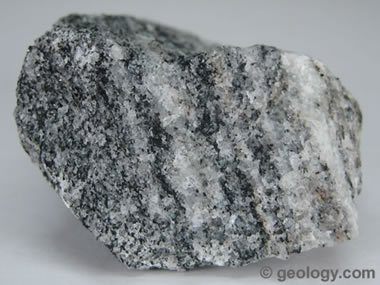
Rock Identification: Again, fastest wins. 

?????? (www.geology.com)
Mapping: Each competitor is given an area to map. There are medals for the fastest map to have all the basic criteria as well as for the most detailed and accurate map when compared to an already drawn map of the area by the judges. 

Rock hammer throw:  You all know that you have tried this event out in the seclusion of the woods, or competed with friends on one of the those down moments in the field. This event just adds a competitive edge to what is already a sport. I envision three main events: hammer throw for distance, accuracy and at skeet. Just imagine lining up with your hammer in its holster, yelling pull, and then whipping it out and taking out a clay pigeon in a cloud of shrapnel as it whizzes past. Sounds like fun to me!

Track events: The track events would be basically the same as the track events of the real Olympics but with one major caveat: all the competitors must be wearing full field kit and carrying a backpack full of samples. This means boots, vest, hammer, hand lens...the whole deal. I'd like to see Usain Bolt do the 100m with 30kg of rock on his back! He would still destroy everyone, but it would be fun to watch.

Navigation/orienteering: This is kind of already a sport, but it has yet to be included in the Olympics and it  would definitely appeal to geologists. Drop the the competitors off with nothing but a compass, map and their rock hammer and see how long it takes for them to get home. However, if this was done in a geologically interesting area they may never make it having banded together to take samples and characterize the geology.

River crossing: Take the competitors to a large river and make them get across without losing their samples. Sounds easy...how many would try and swim weighted down by all those rocks? This is a test of field smarts since this can be necessary in the pursuit of field work. 


Hammer fighting: Not too sure about how this would go down. I could see it getting a bit ugly. However, the regular Olympics have a lot of combat sports so the Geolympics need some fighting too!


(Photo: Matt Herod)
Rock breaking: I realise that this does not sound like much of an event, however it takes real skill to trim a rock in the field. For example, if you are out collecting and find something in a boulder it has to be removed and trimmed to make it possible to carry out. The way I see this event unfolding is that each competitor is given a boulder containing a sample they need to extract. Points for fastest and best job, points deducted for damaging the sample. 


Lava bomb deadlift: This is a pretty obvious one. It is pretty much weightlifting with large rocks. Maybe some throwing too?
Raaagghhh (www.trekearth.com)

Pebble skipping: This one is for fans and Olympians alike!! Medals awarded for distance and most skips. 


The DODECATHALON: All of the above!!!!!!!!!!!! Dodeca is 12 in Greek. 


So there you have the events of the 1st Geolympiad. Might be fun to put it on sometime?? I think I can see the IOC getting in on the fun provided we ensure that there are no doping violations or occurrences of hammer weighting.

Please feel free to suggest any events that you would like to see added to the Geolympics! Also, I have intentionally left the three pictures above un-identified so if you would like to qualify for the inaugural Geolympiad post the answers below.

Enjoy the games!!!

Matt


Field Work Tips

Preparing for field work marks a special time of year to the geologist. It heralds the upcoming field season/trip and the culmination of months or weeks of preparation. In fact, the trip itself is the least important part of field work. The work and preparation leading up is what makes a field trip go great or go horribly wrong. If you prepare carefully and meticulously for the field it has a much better chance of being successful. However, if you wait until the last minute to prepare, or fail to anticipate possible problems...well, the results will speak for themselves. I am in the midst of planning my field work for this summer. I leave in 2 days for Whitehorse, Yukon. It is a short trip this year, but that just makes it more integral that no time is wasted so everything gets done, and done right!

Clearly Charlie Brown and the gang did not prepare for this rainstorm....(Peanuts by Charles Schulz)(www.sln.org.uk)
I think the first tenet of field work that every geologist, biologist, oceanographer, etc. has to accept is that there is no such thing as a perfect field trip/season. Something will always go wrong! I know that this seems pessimistic, but my experience over the years is that something will always mess up. It doesn't matter if it is a large or a small thing, it will happen, and the only thing anyone can do is to try to anticipate these problems and come up with some solutions for them in advance. Of course, despite all of the planning you do something you did not account for will happen to throw a wrench in things so it is important to realize that you will be improvising solutions as the trip progresses. Things like weather or occurrences that are just out of your control, such as a closed ferry, cannot be prepared for. The only solution for acts of random deities is to just roll with the punches and take advantage of the times when things are going well. Finally, each field area is different and will present different challenges. Try and learn as much as you can about the area you are going in advance and plan based on that knowledge. 


My field area for this summer. All of my sample sites have been mapped and added into a GPS as well as all possible trails within the watershed. Hopefully this will make getting around and sampling much easier. 
The second tenet of field work is: you can only learn how to prepare by making mistakes or watching others.   It is sad, but true. We have all made mistakes in our preparations such as not accounting for something going wrong or forgetting an important piece of equipment. The only thing one can do is try not to repeat the mistake or the mistakes others make around you. We are all learning as we go so it is just faster to try and learn from each other. For example, one of my more costly mistakes was taking the lab pH electrode into the field. Lab pH electrodes are not hardy, durable items. They are precise, but they are not made to stand up to the rigours of field work. Unsurprisingly, the lab pH electrode broke. Luckily, we had planned ahead and had a back-up, but this mistake was easily preventable and we wasted a lot of money, since this item was worth over 300 dollars. I now know the difference between these pieces of equipment and will never make this mistake again! 


Oops! Notice the cracks and chips along the bottom. (Photo: Ian Clark)
So far I have spouted lots of doom and gloom and it is easy to get discouraged and adopt a bad attitude towards field work, especially when things go badly. Obviously this is the last thing you should do since the only way to solve problems is to remain clear headed and positive. This leads me to my third and final tenet of field work: have fun. Field work is fun, so enjoy it. Getting outside and going cool places in order to further scientific knowledge is a pretty rare opportunity that very few people get to experience, so don't waste it by getting depressed. The only way to be successful at field work and rise above its trials, learn from them and enjoy being out there!

Me enjoying some permafrost drilling by a retrogressive thaw slump in Fort McPherson, NWT.  (Photo: Laura Malone)
Have a safe and happy field season. I know I will!!

Matt